Showing posts with label himachal gk. Show all posts

Notes on Evolution of " INDIAN CONSTITUTION "


Evolution of our Constitution :
A constitution is  a fundamental law of a country on which government of that country is based.
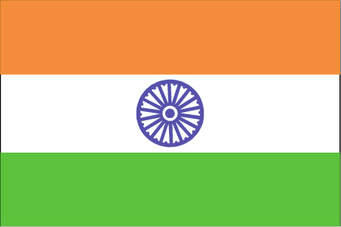

Our Constitution:
  Our constitution was adopted by the Constitution Assembly on 27 November 1949 and fully adopted or came into full operation from 26 January 1950. When constitution was adopted, at that time it had 22 part, 395 articles and 8 schedules. Our constitution is amendable and it is amended from time to time.
  Constitution of India is the world’s largest written Constitution. Various acts by the British administration started its evolution, these acts and regulations are following :

Before 1857;

   1 .  Regulating Act of 1773
       Head of this committee was British Prime MImister Lord Noth. In the report of this act; Governance of East India Company was to be put under British Parliament. The Governor of Bengal was now Nominated as Governor General of Calcutta, Bombay and Madras and Warren Hasting was the first such Governor General. A supreme court was established in Calcutta.

    2.  Pitts India Act:  
     This act provided the provisions for the improvement in Regulating Act of 1773. Now provinces had to follow the instructions of the Central Government. Trade and Commerce related issues were also under the control of court of direction of the company.

   3.  Charter Act of 1793:  
     Provisions of the previous acts were consolidated in this Act. In this court there was provisions related to the salaries of the members of the Board of Controllers from the Indian revenue.

   4.  Charter Act of 1813: 
     In this Act the powers of councils of Madras, Calcutta and Bombay were enlarged. Trade monopoly of East India Company came to an end. And Christian Missionaries were allowed to spread the religion in the whole country.

   5.  Charter Act of 1883:  
     Powers of Governor General were increased and for the first time the Governor-General’s Government was known as the ‘Government of India’ because all the political powers of India were subjected to the Governor-General’s government.

   6.  Charter Act of 1853:
     This Act was a report from then time Governor ‘General Lord Dalhousie’. In this act a separate Governor for Bengal was to be appointed. And recruitment of the employees in the company was to be done through competitive exams.

After 1857: 
   1.   Government of India Act, 1858:  
     This was the first model of government of India after the revolt of 1857. It provided the British control over all over India without any popular participation in the administration. Now the country was divided into provinces which were to be headed by Governor or Lieutenant. Appointed Secretary of state who was ultimately responsible to the British Parliament.

   2.  Indian Council Act, 1861 :  This act was important in the constitutional history of India. By this act Coucil of India was formed, this council was a group of 15 members who assist the Secretary of State. It decentralized the legislative powers of the Governor General’s Council an vested them in the Governments of Bombay and Madras.

  3.  Indian Council Act, 1892 : by this act the non-official members of the Indian Legislative Council were to be nominated by the Bengal Chamber of Commerce and the Provincial Legislative Councils while the non-official members of the Provincial Councils were to be nominated by certain local bodies such as universities, districts boards, municipalities etc.

   4.  Morley-Minto reforms and the Indian Council Act, 1909 : Number of maximum members in the Indian Legislative Council was increased from 16 to 60. This act or this reform was by then time Secretary of States for India ‘Lord Morley’ and the Viceroy ‘Lord Minto’. For the first time a separate representation for the Muslim community was formed which sowed the seeds of separatism.

  5.  Government of India Act, 1919 and Montague-Chelmsford Report. : 

 Ø This act was proposed by then time Secretary of State for India Mr. Montague and the Governor General Lord Chelmsford.
 Ø   By this act the Administration was divided into two categories Central and Provincial. Central were inder the direct control of the central Government.
Ø  And Provncial were those which were divided into two sub categories ; ‘Transferred and ‘Reserved’.
Ø  The Transferred subjects wese to be administrated by the Governor with ministers in which the proportion of elected members was increased to 70%.
Ø The Reserved subjects were to be administrated by the Governor with no responsibility to the Legislature.
Ø  The provincial budget was separate from the central budget. SO now Indian legislature was bi-cameral for the first time consisting two houses – One is the Upper House ( Council of States ) which composed of 60 members whom 34 were elected. And other The Lower House or Legislative Assembly , composed of 144 members out of which 104 were elected.

Simon commission :
Ø   This commission was headed by Sir John Simon. He was appointed in 1927 to inquire into the working of the Act of 1919, placed its report in 1930.

The Government of India Act, 1935 :
Ø   It was optional for the Indian States to join the federation and since they never joined, tge Federation never came into being.
Ø   In this Act of 1935 it was prescribed a federation of tking the Provinces and the States as units.
Ø   This act divided the legislative powers between the Centre and Provinces.
Ø   The centeral legislation was remained bi-cameral means it had two houses, federal assembly and council of states.
Ø   Dominion Status which was promised by the Simon omission in 1929, was not conferred by the Government of India Act 1935.

Cripps Mission :

In 1942 Sir Stafford Cripps a member of cabinet came with a draft on the proposals of british government.
Acc. To the proposals:
Ø     The constitution should given India Dominion Status.
Ø    If a province is not accepting the Constitution would be free to retain its constitutional position.
Ø    The constitution of India was to be framed by an elected Constitution Assembly by the Indian people.

Cabinet Mission Plan :
Ø    Lord Attlee sent a cabinet mission to India and this mission was consisting three members Lord Pethick Lawrence, Sit Stafford Cripps and Mr. A.V. Alexander.
Ø    According to this mission There was to be a union of India, including both British India and the States, and having jurisdiction over Defence, Foreign affairs and Communications.
Ø    The provinces could form groups with executives and legislatures.

The Mountbatten Plan :

Ø    This plan was for transfer of power from the British to Indians and partition of the country.
Ø    For this a statement was given by the British Government on 3rd June 1947.

The Indian Independence Act, 1947 of the British Parliament :

Ø    It amended the Government of India act 1935 and adaption of partition of India and Pakistan.
Ø    The Governor General and all the Governors lost their powers.
Ø    The office of Secretary of State for India was also abolished so now there was no any Secretary of State and Any Governor General or governor.

Making of Constituion :

Ø    Members of constitution assembly were elected by the provincial legislative assemblies.
Ø    Each seat was with a proportion of one to a million.
Ø    The total number of members of the Assembly was 385, and out of 385 93 were representatives from the Indian States and 292 were from Provinces.
Ø    First meeting of constitution assembly was held on 2nd December 1946 and reassembled on 14th August 1947, as the sovereign Constitution Assembly for the dominion of India.
Ø    The constitution of India took two years, eleven months and eighteen days for the assembly to finalise and complete the constitution.

Now we come to the Different Sources of the Indian Constitution :
 The skeleton of our constitution was the Government of India Act 1935. This act formed the blueprint of the constitution like Federal system, emergency powers, office of Governor etc.
Ø    From Constitution of Britain :  From the constitution of Britain things like Single citizenship, Bi-cameral parliament, law making procedure, office of CAG were taken.

Ø    From the constitution of USA : Independence of judiacial review, provisions of removal of Supreme court and high court judges, preamble and fuctions of president and vice president.


Ø    From the Constitution of Canada ; Supreme court’s advisory jurisdiction, Federation with strong centre.

Ø    From the Constitution of Ireland : Directive Principles of state policy, method of presidential elections and the nomination of members of Rajya Sabha by the President.

Ø    From Weimar Constitution of Germany : Provisions of suspension of fundamental rights during emergency.

Ø    From the Constitution of South Africa :  Election of member of Rajya Sabha on the basis of proportional representation and Amendment with 2/3rd majority in Parliament.

Ø    From the Constitution of France : Principles of Liberty, Republication system, Equality a Faternity.

Ø    Form the Constitution of USSR :  Fundamental Duties, Ideals of justice in Preamble.


Now in our next post we will post about Important Articles and Amendments of “The Constituion of India”.


Beautiful 'Jia Valley' !!

Jia Valley

Jia valley : 

Jia valley is Situated in the Palampur Tehsil of Kangra district in Himachal Pradesh .Jiya Valley is near Gopalpur village and Chamunda Devi Mandir. Jiya village is situated at the bottom of Himani Chamunda Devi mountain . it is a beautiful village and the most famous place in Kangra . View of this village is awesome because of its plain area surrounded by Hills and mountains. You can reach here from Kangra town towards Chamunda Devi temple via SH-17 and from the same state highway from Palampur. It is 15 km from Palampur city.

According to some theories or local belief During Mahabharata period  Pandavas constructed this village in one night Now is Known as Jia Village or Jia Valley.

 More About Jia:

Jia is a village situated in the lape of dhauladhar mountains and at the bottom of Adi Himani Camunda hill. Location of this valley is beautiful and this village is situated on the bank of a small river 'Baner' thats why this is known as a valley or Jia Valley. there are plain fields and people cultivate wheat, rice , mustard,potato, maize etc. here. 
 This village is surrounded by pine trees. These pine trees look like boundaries of this village. 
Hydel Project In Jia : There is a hydel project in JIA village in near dharamshala in palampur tehsil of District Kangra in Himachal Pradesh. Baner Hydoelectric Project . This Hydel Project is on Baner river (khad).It is one of the prestigious Hydel Project of 12MW. There is one of the longest Head Race Tunnel of 3.5 km in length and 1.8 meter in diameter. This project was completed in 1966 and till date it is generating Electricity.
 

Formation of JIA : There are two theories for the foundation of this valley , beacause if you see this village and notice , then you can find that village's outside boundaries are man made and this is a designed place.
 According to first belief (local belief), in the Ancient time or in Mahabharata time , When Pandavas were in exile for one year known as Agyatwaas. In one night they were constructing here a dam to store water but they remained their work in the way. So this uncompleted dam converted into Jia Valley.
 And according to second theory , Pandavas were plannig to built a city here so they started consturcting here but then they remained it uncompleted and then they constructed the same city or town As Kullu. So the area and design of Kullu Town and Jia is almost similar.
 So this village looks like different from all over surrounding locations and places.
 Adi Himani Chamunda trek starts from Jia. It is a 7.4 km trek for Adi Himani Chamunda peak from Jia village. This is a beautiful trek from Jia to Adi Himani Chamunda. Soon we will tell you about the complete history and trek of himani Chamunda.
 So it was all about Jia village popularly known as "Jia Valleye". In our next posts we will try to explore more interesting places and will tell you about these.


State Animal Of Himachal Pradesh


Snow Leopard is the State Animal of Himachal Pradesh.
The snow leopard inhabits Alpine and Subalpine zones at elevations from 3,000 to 4,500 m (9,800 to 14,800 ft), ranging from western Afghanistan to Mongolia and western China. In the northern range countries, it also occurs at lower elevations.
Snow Leopard population in India is between 200-600 .
So it is an Endangered species.

In Himachal these are conserved in some wildlife sanctuaries and national parks , these are:

Kibber Wildlife Sanctuary (Lahul Spiti) , Pin Valley National Park , Great Himalayan National Park (Kullu). etc. 
Snow Leopard can kill animals of two to four times  of it's weight.
 The snow leopard's fur is whitish to gray with black spots on head and neck, but larger rosettes on the back, flanks and bushy tail. The belly is whitish. The fur is thick with hairs between 5 and 12 cm (2.0 and 4.7 in) long. Its body is stocky, short-legged and slightly smaller than the other cats of the genus Panthera, reaching a shoulder height of 56 cm (22 in), and ranging in head to body size from 75 to 150 cm (30 to 59 in). Its tail is 80 to 105 cm (31 to 41 in) long. Its eyes are pale green or grey in color. Its muzzzle is short and its forehead domed. Its nasal cavaties are large. It weighs between 22 and 55 kg (49 and 121 lb), with an occasional large male reaching 75 kg (165 lb) and small female of under 25 kg (55 lb).
The snow leopard shows several adaptations for living in a cold, mountainous environment. Its body is stocky, its fur is thick, and its ears are small and rounded, features that help to minimize heat loss. Its broad paws well distribute the body weight for walking on snow, and have fur on their undersides to increase their grip on steep and unstable surfaces; it also helps to minimize heat loss. Its long and flexible tail helps to maintain balance in the rocky terrain. The tail is also very thick due to fat storage, and is very thickly covered with fur, which allows the cat to use it like a blanket to protect its face when asleep.
The snow leopard cannot roar like tigers and Lions despite possessing partial ossification of the hyiod bone. This partial ossification was previously thought to be essential for allowing the big catsto roar, but new studies show that the ability to roar is due to other morphological features, especially of the larynx which are absent in the snow leopard. Snow leopard vocalizations include hisses, chuffing, mews, growls, and wailing.

 Reproduction and Life Cycle :

Snow leopards are unusual among large cats in that they have a well-defined birth peak. They usually matein late winter, marked by a noticeable increase in marking and calling. Snow leopards have a gestation periodof 90–100 days, so the cubs are born between April and June. Oestrus typically lasts from five to eight days, and males tend not to seek out another partner after mating, probably because the short mating season does not allow sufficient time. Paired snow leopards mate in the unusual field posture from 12 to 36 times a day.
The mother gives birth in a rocky den or crevice lined with fur shed from her underside.Litter sizes vary from one to five cubs, but the average is 2.2. The cubs are blind and helpless at birth, although already with a thick coat of fur, and weigh from 320 to 567 g (11.3 to 20.0 oz). Their eyes open at around seven days, and the cubs can walk at five weeks and are fully weaned by 10 weeks. so when they are born, they have full black spots which turn into rosettes as they grow to adolescence.
The cubs leave the den when they are around two to four months of age, but remain with their mother until they become independent after around 18–22 months. Once independent, they may disperse over considerable distances, even crossing wide expanses of flat terrain to seek out new hunting grounds. This likely helps reduce the inbreeding that would otherwise be common in their relatively isolated environments. Snow leopards become sexually mature at two to three years, and normally live for 15–18 years, although in captivity they can live for up to 25 years
 Threat to snow leopard population is illigal trade of skines and body parts.

Chandra Taal And Suraj Taal, Beautiful Lakes in Lahul Spiti

Chandra Taal : 

Chandra Taal means the Lake of The Moon. Chandra Taal is situated in The Spiti valley in Lahul Spiti district of HImachal Pradesh.
This is situated at an altitude of 4270 meters It is the source of the Chandra river.
Chandra Taal lake is one of the most beautiful tourist and trekking destination. This lake remains frozen in winters.
Chandra Taal is a popular destination for trekkers and campers. The lake is accessible on foot from Batal as well as from Kunzum Pass from late May to early October. There is also a motor road accessible as far as a parking lot 2 kilometres (1.2 mi) from the lake. The route from Kunzum Pass is accessible only on foot, and it is about 8 km (5.0 mi) from Chandra Taal. Chandra Taal is also accessible from Suraj Taal, 30 km (19 mi) away.

Chandra Taal


Suraj Taal :

Suraj Taal means the Lake of The Sun God  it is situated at an elevation of 4890 meters from mean sea level in the Lahul Spiti District of Himachal Pradesh.
This lake is the surce of Bhaga River. 
Suraj Taal is the highest lake of Himachal Pradesh.
The lake is fed from the glaciers and torrential nullahs (streams) originating from the Bara-lacha-la pass, which is 8 km (5.0 mi) long and is also called the "Pass with crossroads on summit" since roads from Zanskar,Ladakh, Spiti and Lahaul meet at this pass.In addition to the Suraj Tal and the Bhaga River that originates from it, Bara-lacha-la Pass is also the source of the Chandra and Yunan Rivers in the northwest and north, respectively.
The lake is situated in the Upper Himalayan Zone or High Latitudinal Zone part of the Himlayas which has very sparse population with climatic conditions akin to polar conditions. Snowfall in this zone, though scanty, is reported to be spread all round the year. Rainfall precipitation is rare in the region. Snw precipitation from snow storms is reported to be less than 20 cm (7.9 in) of snow in nearly 50% of the storms, even though one observatory in the region has reported 80 cm (31.5 in) of snow fall. 
 The precipitation starts melting from May. Snow on slopes is generally slackly bonded, with wind redistributing it.
The Bhaga Valley (Tod or Stod Valley) formed from Suraj Tal up to Tandi, the confluence point with Chandra River, is 64 km (39.8 mi) long. The valley, which is a narrow gorge, is devoid of any vegetation up to Darcha and thereafter it widens up to its confluence with Chandra River at Tandi with terraces between Darcha and Tandi which are under cultivation in the lower slopes, with the middle slopes having grasslands. Plantation of trees and shrubs to meet fuel wood and fodder requirements have been done on the hill slopes.

Suraj Taal

Shimla in winters

                                      SHIMLA

Shimla is the capital of Himachal Pradesh.
Shimla is the most famous tourist spot and also it is the most beautiful hill station .
People from all over the world visit here every year But view of this beautiful place becomes more beautiful during winter. Because of Snowfall in winters it attracts many people .

 History :
  The area of present-day Shimla was invaded and captured by Bhimsen Thapa of Nepalen 1806. The British East INdia Company took control of the territory as per the Sugauly Treaty after the Anglo-Nepalese War (1814–16). The Gurkha leaders were quelled by storming the fort of Malaun under the command of David Ochterlony in May 1815. In a diary entry dated 30 August 1817, the Gerard brothers, who surveyed the area, describe Shimla as "a middling-sized village where a fakir is situated to give water to the travellers". In 1819, Lieutenant Ross, the Assistant Political Agent in the Hill States, set up a wood cottage in Shimla. Three years later, his successor and the Scottishcivil servant Charles Prat Kennedy built the first pucca house in the area in 1822, near what is now the Himachal Pradesh Legislative Assembly building. 

  The accounts of the Britain-like climate started attracting several British officers to the area during the hot Indian summers. By 1826, some officers had started spending their entire vacation in Shimla. In 1827,Lord Amherst , the Governor General Of Bengal, visited Shimla and stayed in the Kennedy House. A year later, Lord Comerbere, the Commander-in-Chief of the British forces in India, stayed at the same residence. During his stay, a three-mile road and a bridge were constructed near Jakhu. In 1830, the British acquired the surrounding land from the chiefs of Keonthal and Patiala in exchange for the Rawin parganaand a portion of the Bharauli pargana. The settlement grew rapidly after this, from 30 houses in 1830 to 1,141 houses in 1881. 

Geography :
  Average altitude Of Shimla is 2206 meters from the mean sea level.  Shimla was built on seven different hills. Forests around the city are mainly of deodar, pine ,rhododendron etc.
 This city is 88 km from kalka and 116 km from Chandigarh .

Climate : 
   Shimla is cool in winters and moderately warm in summers.Average temperature is from -4 degrre C to  31 degree throughout the year.
  In winters it attracts more tourists due to snowfall.

Some Popular places in Shimla :
    The Mall. Ridge, Junga, Jutogh, Jakhoo ,Tara Devi , Anand Vilas , Mashobra etc.


Here you can see a video of fresh snowfall in Shimla ↴

About "Mohicans'

The  Mahicans   are an Eastern Algonquian American tribe related to the abutting Delaware people, originally settled in the upper Hudso...

Popular